
Illinois
Democrat dating in Illinois
Illinois backed Kamala Harris with 54.77% of the statewide vote in 2024. That statewide number undersells just how Democrat the state's population center actually is: Chicago itself voted for Harris by a roughly 57-point margin, 78% to 21%.

Illinois is a state of sharp contrasts: Chicago and its inner suburbs are among the most reliably Democrat places in the country, while much of downstate Illinois, outside the state capital and a handful of college towns, leans Republican. That divide shapes the state's politics constantly, but it also means Illinois's Democrat community, concentrated as it is, is unusually large, dense, and easy to find.
For members, that concentration is a real advantage. Chicago alone is home to millions of progressive singles, and the surrounding suburbs and downstate cities add meaningfully to that pool, all connected by a shared political identity that's been central to Illinois's public life for generations.
Top Democrat-voting cities in Illinois
These are the cities we're building dedicated pages for first in Illinois, chosen for the size and reliability of their Democrat vote.
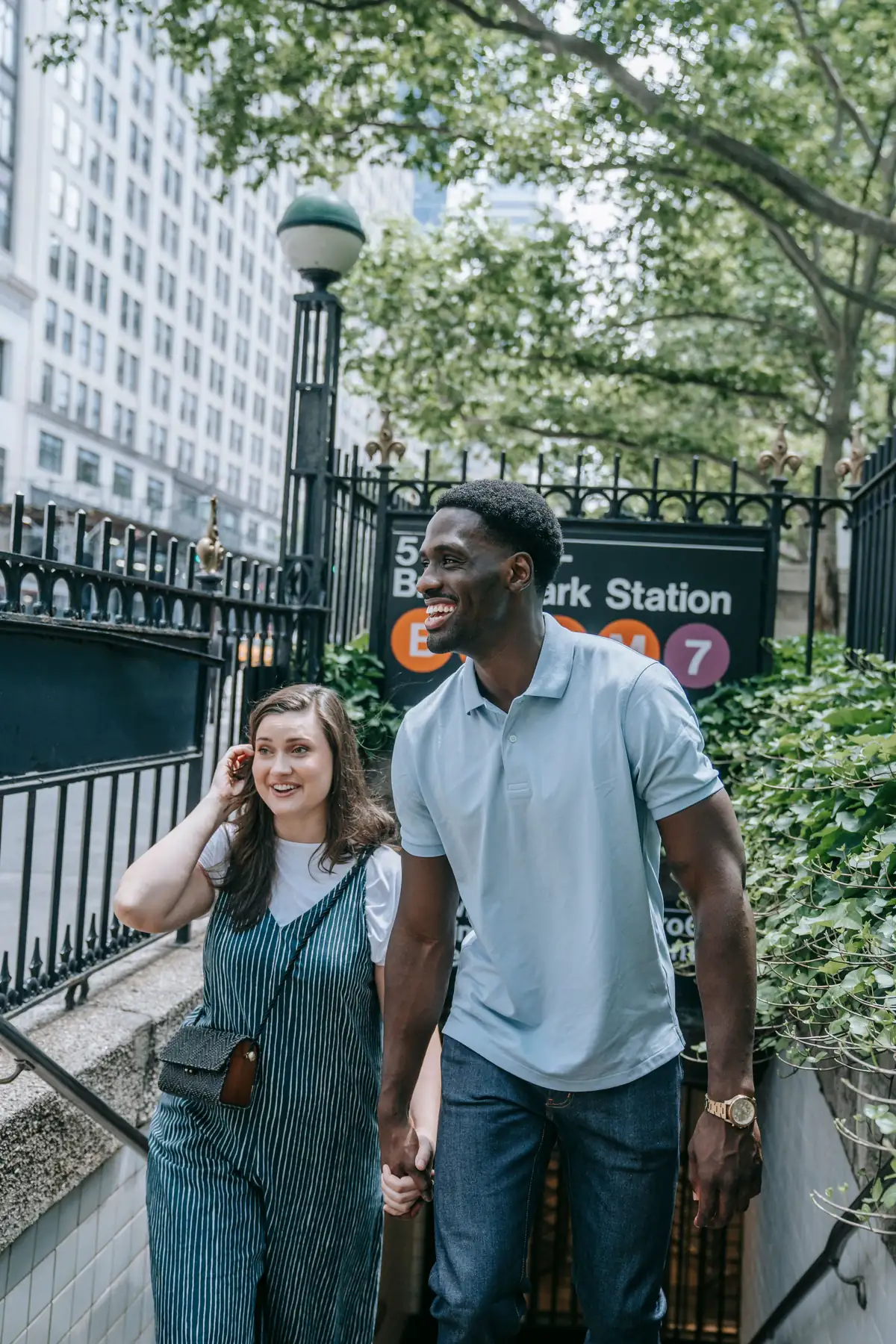
Chicago
Harris carried Chicago roughly 78% to 21% in 2024, one of the largest Democrat margins of any major U.S. city.

Evanston
A close-in Chicago suburb with a college-town energy and one of the most progressive electorates in the state.

Springfield
Illinois's capital, and a downstate city with a Democrat-leaning core built around state government.
Beyond these three, cities like Oak Park, Champaign-Urbana, and Rockford all have notable Democrat-leaning communities too, and we're adding dedicated pages for them as we expand the site.
What dating looks like here
Chicago's dating culture is shaped by its neighborhoods as much as by the city as a whole, Wicker Park, Logan Square, and Pilsen each have their own distinct social scene, but nearly all of them share a strong civic and political identity. Illinois's Democrat community, especially in and around Chicago, is deeply tied to labor organizing, a legacy that stretches back over a century and still shapes how people here think about work, fairness, and community.
Outside Chicago, Illinois's Democrat-leaning cities tend to be smaller, more tightly knit communities, often built around a university, state government, or a specific industry, where shared political values are a well-understood part of local identity rather than something that needs explaining.
A note on the rest of the state
It's worth being upfront that Illinois's Democrat lean is heavily concentrated in and around Chicago. Large parts of downstate Illinois vote Republican, a divide that shapes state politics constantly. Dating Democrat's Illinois pages focus on the cities where the Democrat vote share is highest, starting with Chicago, Evanston, and Springfield, and we'll expand to more of the state as the site grows.
A state shaped by labor and community organizing
Illinois's political identity is inseparable from its labor history. Chicago was the site of some of the most consequential labor organizing in American history, and that legacy still runs through the city's unions, its politics, and the way longtime residents talk about work and fairness. Community organizing has an equally deep tradition here, Illinois is where a lot of modern grassroots organizing techniques were developed and refined, techniques that are still taught and practiced by advocacy groups across the state today.
That history gives Illinois's Democrat community a particular character: practical, organized, and genuinely oriented toward translating values into tangible local action rather than treating politics as an abstract identity.
Getting started across the state
Whether you're in Chicago's dense urban core, Evanston's college-town energy, or Springfield's government-town pace, creating a profile connects you to a statewide Democrat community that spans all three, plus members throughout the rest of Illinois. As with any online dating platform, ordinary precautions apply: meet in public, arrange your own transportation, and take time getting to know someone before sharing personal details.
Illinois's public transit, particularly the Metra and Amtrak connections linking Chicago to its suburbs and to Springfield, makes it realistic for members to consider connections beyond their immediate city as the state's community continues to grow.
A state where politics is personal, not abstract
Illinois's political culture, especially around Chicago, has always run on personal relationships and neighborhood-level organizing rather than abstract ideology. Ward politics, precinct captains, and block clubs remain a real part of how things get done here, a legacy of the city's famous political machine that, whatever its flaws, taught generations of Illinoisans that local organizing produces real results. That tradition has evolved into a modern, broad-based progressive organizing culture that's produced some of the most effective grassroots campaigns in the country.
For members, that history shows up as a certain directness and practicality in how people here talk about politics. It's less about performing values and more about what specific policy or organizing effort actually changed something in someone's neighborhood, which makes for a grounded, substantive kind of first conversation.
Safety and practical tips for dating in Illinois
As with any online dating platform, ordinary precautions apply regardless of which part of Illinois you're in: meet in a public place for a first date, arrange your own transportation rather than relying on a match to pick you up, and take time getting to know someone before sharing personal details like your home address or financial information. Chicago's extensive train and bus network makes it easy to meet in a busy, well-populated public spot, and the same applies in the state's smaller Democrat-leaning cities, where downtown cores tend to be compact and easy to navigate.
A statewide community anchored by a genuine metropolis
Illinois's Democrat community is unusual in how concentrated it is without being small. Chicago alone has a larger population than 21 entire U.S. states, which means even a city-centered dating pool here is genuinely enormous, spanning dozens of distinct neighborhoods, cultures, and social scenes. That scale gives members real choice, not just in who they might date, but in what kind of Chicago they want to build a life in, dense and fast-paced, or quieter and more residential.
Beyond Chicago, Evanston and Springfield each add their own distinct flavor: college-town energy paired with deep civic engagement in Evanston, and a smaller, government-town pace in Springfield. Together, the three give members a genuine range of city sizes and social rhythms, all connected by the same statewide Democrat community and the same underlying political values.
Illinois's public university system, and the Big Ten's presence at the University of Illinois Urbana-Champaign, also feeds a steady stream of new graduates into Chicago and the state's other Democrat-leaning cities each year, keeping the community's age profile relatively young even as the state's overall population growth has slowed.
Illinois's food culture, deep-dish pizza aside, reflects the same layered immigration history as its politics, from long-established Polish and Mexican communities to newer arrivals from across the world, and that culinary diversity gives members plenty of low-pressure ways to explore the state's neighborhoods together on a date.
The state's flat geography and extensive rail network, both a legacy of its role as a 19th-century transportation hub, still shape how easily members can move between its Democrat-leaning cities today, Amtrak's connections between Chicago and Springfield, in particular, make it realistic to consider a date or a relationship spanning both ends of the state.